
Indica, sativa and hybrid labels are useful menu signposts, but they are not a complete way to compare cannabis flower. The clearest approach is simple: use the label to narrow the shelf, then compare the current product page for format, listed profile, lineage when provided, aroma, flavour, appearance, size options and cart details.
The quick answer: indica vs sativa vs hybrid is best understood as a sorting system, not a guarantee. A 2022 PLOS ONE study, The phytochemical diversity of commercial Cannabis in the United States, mapped almost 90,000 commercial flower samples from six US states and found that common commercial labels do not consistently match one simple chemical pattern.
This guide is for adult shoppers in Kitchener, Waterloo, Cambridge, Guelph and nearby Waterloo Region communities who want a practical, no-hype way to read a flower menu. When you want to browse live options, start with cannabis flower, then compare the indica flower page, sativa flower page and hybrid flower page.
Key takeaways
- Use indica, sativa and hybrid labels to sort the menu, then compare product-specific details.
- Health Canada says product labels display Total THC and Total CBD, which makes the current listing more useful than the category name alone.
- The strongest choice is the one with clear format, size, aroma, flavour, image and cart information.
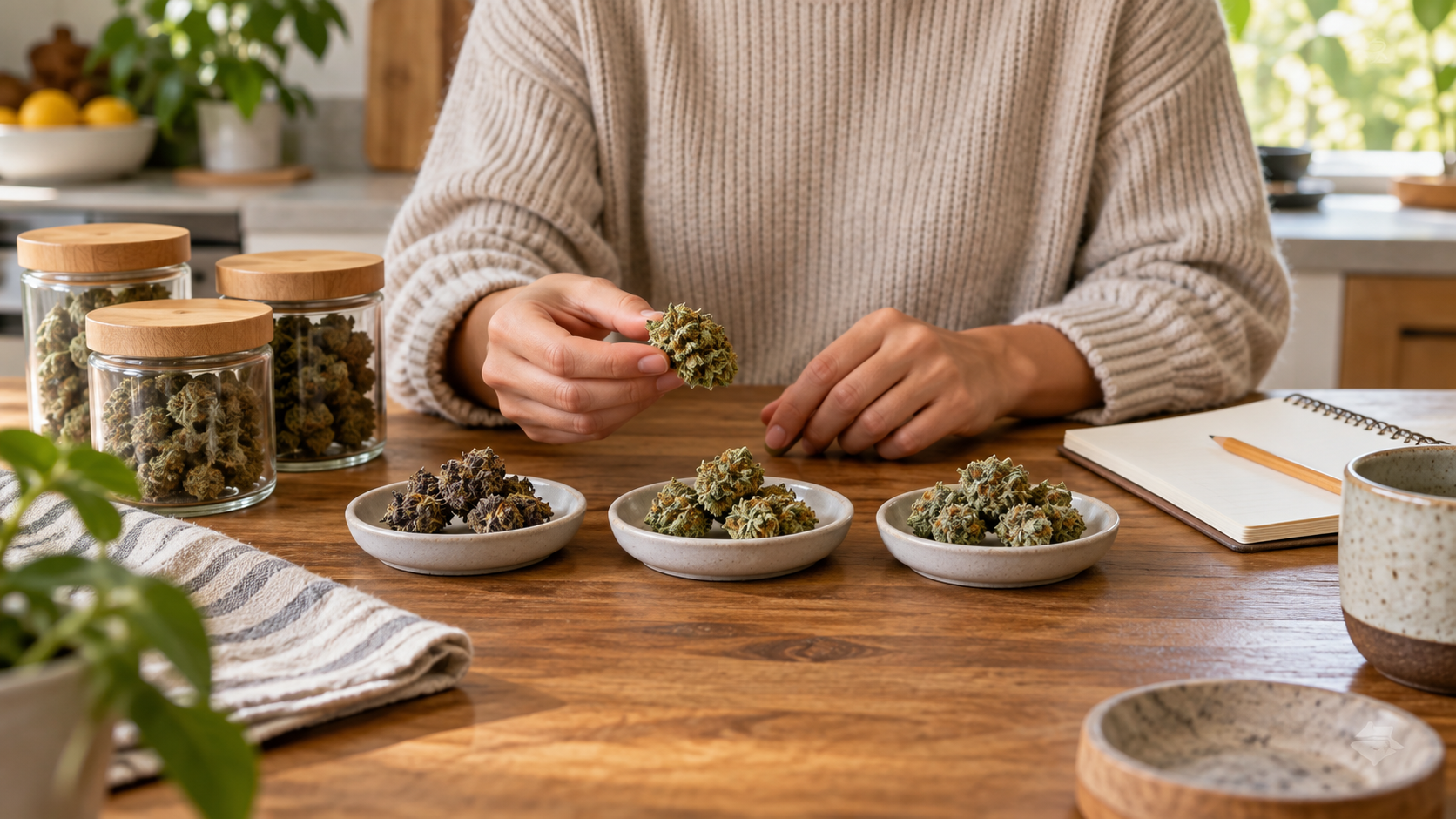
What Do Indica, Sativa and Hybrid Mean on a Menu?
On a retail menu, indica, sativa and hybrid are category labels. Health Canada’s cannabis product label guide explains that labels identify the class of cannabis product and show Total THC and Total CBD values. Those details make the product page more useful than the category label by itself.
Indica usually points to products marketed in the indica family. Sativa points to products marketed in the sativa family. Hybrid means the product is presented as a blend of indica and sativa lineage, or as a cross between parent strains with different backgrounds.
The label can make a large menu easier to scan. It can help you find the right category page faster. It can also give you shared vocabulary when comparing products. But it should not be treated as a promise, a personal recommendation or a complete product description.
Why Are the Labels Helpful but Limited?
The biggest limitation is that one broad label cannot explain every current product detail. In 2022, PLOS ONE researchers analyzing almost 90,000 commercial samples found that indica, sativa and hybrid labels did not consistently align with observed chemical diversity. That is a reason to read the listing, not a reason to ignore the labels.
A better question is: what can I verify on this product page? Look for the listed category, strain or cultivar name, parent lineage if available, THC or CBD values when shown, aroma notes, flavour notes, format, weight, product image, stock state and cart options.
That shift keeps the decision practical. You are not trying to decode every strain name on the menu. You are choosing between current listings using the same set of checks.
How Should You Read an Indica Product Description?
Start with format, then move to product details. Health Canada’s label guide says dried cannabis, fresh cannabis, extracts, edibles and other classes are identified differently, so comparing flower with flower keeps the decision cleaner. After that, check the current size, image, listing details and cart option.
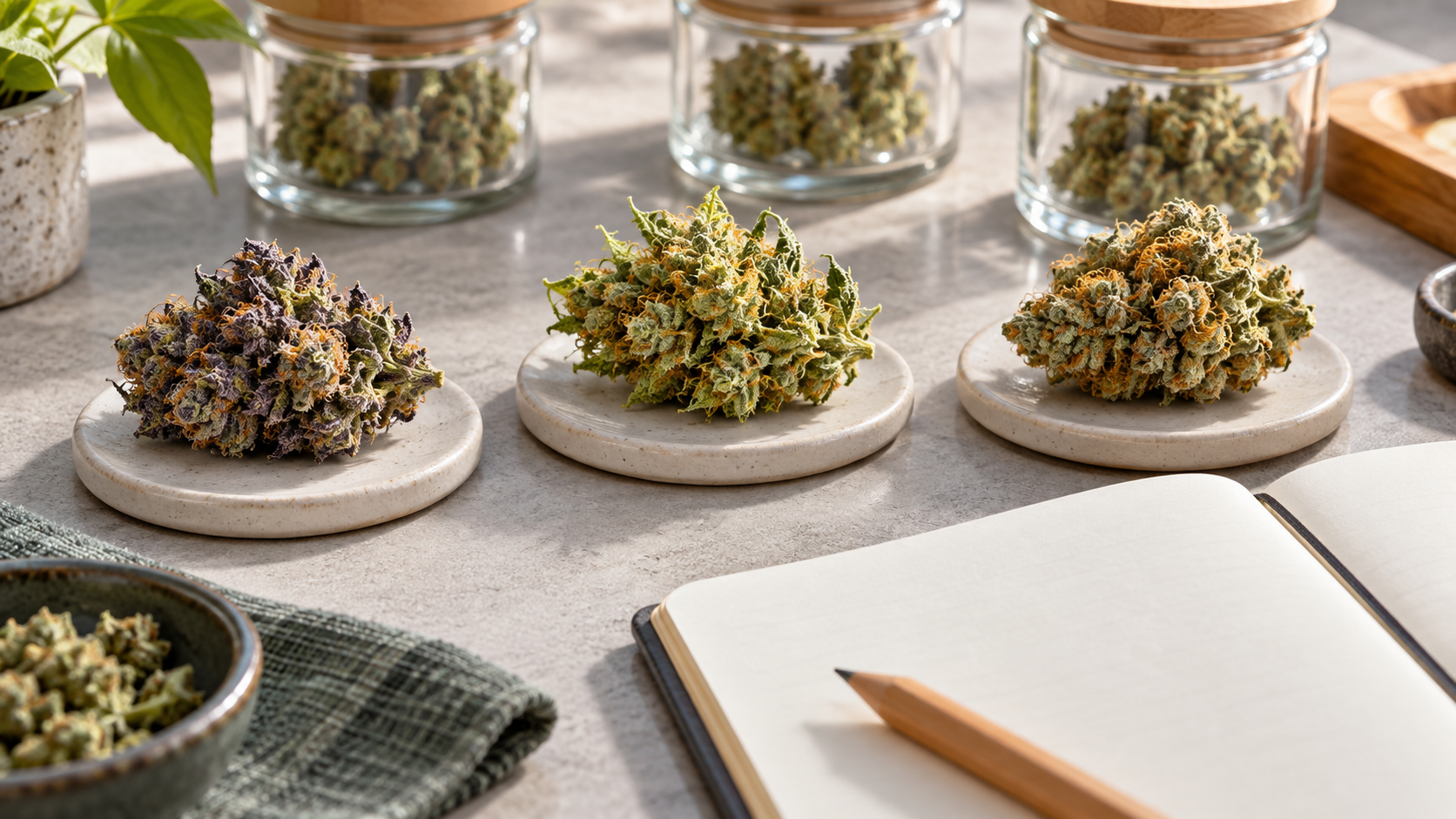
For flower, useful indica comparison points include appearance, density, trim, colour, aroma, flavour and lineage when listed. A description that mentions sweet, earthy, gassy, berry, pine or dessert-style notes gives you practical shopping language without turning the label into a claim.
Do not assume every indica listing is similar. One may be presented as a value ounce, another as a smaller premium option, and another as part of a multi-ounce deal. Compare the product format and current menu details before comparing the name.
How Should You Read a Sativa Product Description?
Read sativa pages the same way: label first, details second. In the PLOS ONE study, label groups were less useful than product-level chemical and profile information for explaining commercial flower diversity. For shoppers, the practical version is simple: check the listing before trusting the category name alone.
Scan the current options, then look for concrete parts of the listing. Does it mention citrus, tropical fruit, herbal, floral, sweet or sharp aroma notes? Does the page show a product image and a clear size? Does the cart option match the title?
Sativa descriptions across the wider market can lean on big language, so keep the comparison grounded. If the page gives you flavour, aroma, lineage or visual cues, use those details. If it only gives a name and a price, compare it more cautiously against listings with fuller descriptions.
How Should You Read a Hybrid Product Description?
Hybrid is the broadest of the three labels. The 2022 PLOS ONE paper found that commercial labels can show some association with chemical groupings, but they do not form a complete one-label explanation. That makes the individual hybrid product page especially important.
If a hybrid page lists lineage, start there. Parent names can explain why a product appears in the hybrid category and can help you compare it with nearby listings. If lineage is not shown, use the same practical cues: aroma, flavour, product photo, size, format and cart options.
Hybrid does not mean vague. A useful hybrid listing should still tell you what makes the product distinct. If two hybrid items look similar, compare their concrete details rather than trying to rank the label itself.
What Is a Simple No-Hype Comparison Checklist?
Use one checklist every time you compare indica, sativa and hybrid products. Health Canada’s label guide highlights label details such as product class, net weight or volume, number of units and Total THC and Total CBD. Those are the kinds of fields that make comparisons more reliable.
- Confirm the format. Compare flower with flower, pre-rolls with pre-rolls and vapes with vapes.
- Check the category label. Use indica, sativa or hybrid to narrow the menu, not to finish the decision.
- Read the product details. Look for lineage, aroma, flavour, appearance, size, package format and current options.
- Compare matching fields. Do not compare one product’s flavour note against another product’s promo headline.
- Review the cart. Confirm the selected size, quantity and product before checkout.
This keeps the choice calm and repeatable. If two listings do not give you the same kind of information, favour the one that is clearer, or compare it more carefully before adding it to your cart.
What Mistakes Should You Avoid?
The main mistake is assuming the label predicts everything. PLOS ONE’s 2022 findings are a useful reminder: commercial labels are not a perfect substitute for product-specific information. Use the label to sort, then read the listing.
- Comparing across formats. Flower, vapes, edibles and concentrates have different product details. Compare within the same format first.
- Skipping the product page. Category pages help you browse, but product pages usually hold the more specific details.
- Letting hype words choose for you. Clear aroma, flavour, size and format details are more useful than vague claims.
- Ignoring stock and cart details. A listing only helps if the current option in the cart matches what you meant to select.
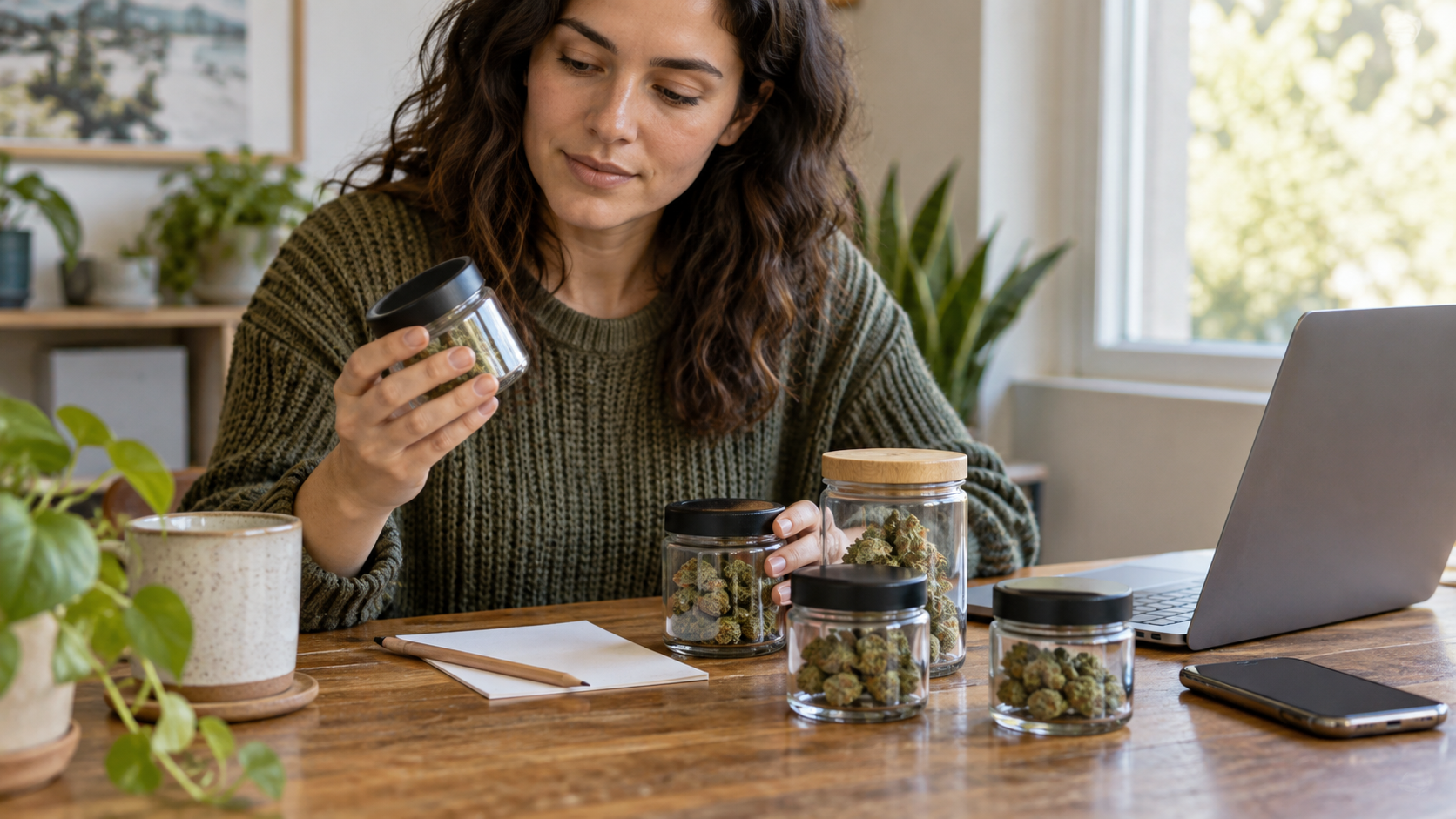
How Can Tasty Pot Shoppers Use the Labels?
If you already know you want flower, start with the main flower menu. From there, use the indica, sativa and hybrid category pages to narrow the shelf. Open a few product pages in the same category and compare the same details across each listing.
If the labels are not enough, step back to the full flower page and compare by format, size or current offer instead. There is no prize for forcing every product into a perfect category story. The goal is a clearer cart.
For a broader ordering framework, the published guide on how to compare weed delivery menus walks through menu freshness, product detail quality and cart confidence. Use that guide when the whole menu feels busy, and use this one when the indica, sativa and hybrid labels are the confusing part.
FAQ
Is indica better than sativa?
No label is automatically better. Indica and sativa are menu categories, not universal rankings. The clearer choice depends on current product details you can verify, such as format, size, aroma, flavour, appearance and available options.
What does hybrid mean on a cannabis menu?
Hybrid usually means the product is presented as a cross or blend of indica and sativa lineage. Because hybrid is broad, read the individual product description for parent strains, aroma, flavour, size and format details.
Should I shop by strain name or category first?
Use category first if you are narrowing a large menu. Use strain or cultivar name next, then compare the product page details. A name is easier to evaluate when you know the format and category you are shopping.
Do aroma and flavour notes matter?
They matter as shopping details because they help compare products in plain language. Aroma and flavour notes should be read as descriptive listing information, not as a guaranteed personal result.
What should I do if a product description is thin?
Compare what is available: product image, format, size, category, stock state and cart options. If the listing still feels unclear, choose a product with clearer details or ask support before ordering.
Shop Labels With a Clearer Framework
Indica, sativa and hybrid labels are useful when they help you navigate. They become less useful when they replace the details on the product page. Start with the label, compare practical information, then review your cart before ordering.
Ready to browse? Compare current indica flower, sativa flower and hybrid flower options from the live Tasty Pot menu.
Sources Checked
This guide was checked against Health Canada’s How to read and understand a cannabis product label page, retrieved 2026-09-27, and Smith CJ, Vergara D, Keegan B, Jikomes N. The phytochemical diversity of commercial Cannabis in the United States, PLOS ONE, 2022, retrieved 2026-09-27.


Add comment